Spec analysis, mechanical explainers, tool setup guides, and evidence-led buying research.
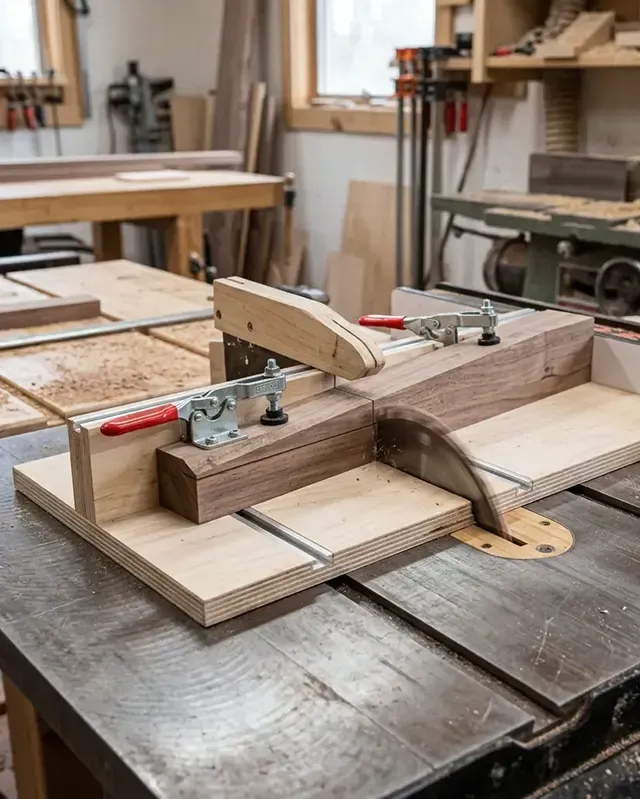
Table Saw Taper Jig Explained: Safer Taper Cuts and Setup Logicaccessories •Jun 28, 2026
accessories •Jun 28, 2026
Table Saw Taper Jig Explained: Safer Taper Cuts and Setup Logic
Understand how a table saw taper jig works, the mechanical differences between unclamped and clamped designs, and the setup checks that improve control when cutting angled legs.
Table Saw Blade Cleaning: Resin Buildup, Heat, and Cut Qualitymechanics •Jun 3, 2026
mechanics •Jun 3, 2026
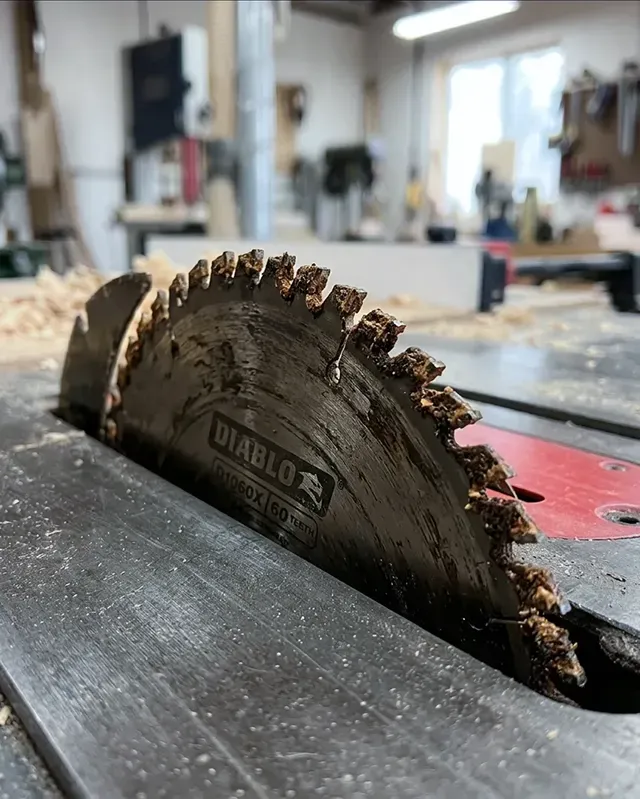
Table Saw Blade Cleaning: Resin Buildup, Heat, and Cut Quality
A table saw blade can feel dull when pitch buildup increases friction and heat. Learn how resin changes tooth clearance, cut quality, and blade maintenance.
FTG vs ATB vs TCG: Table Saw Tooth Geometry Explainedaccessories •Jun 3, 2026
accessories •Jun 3, 2026
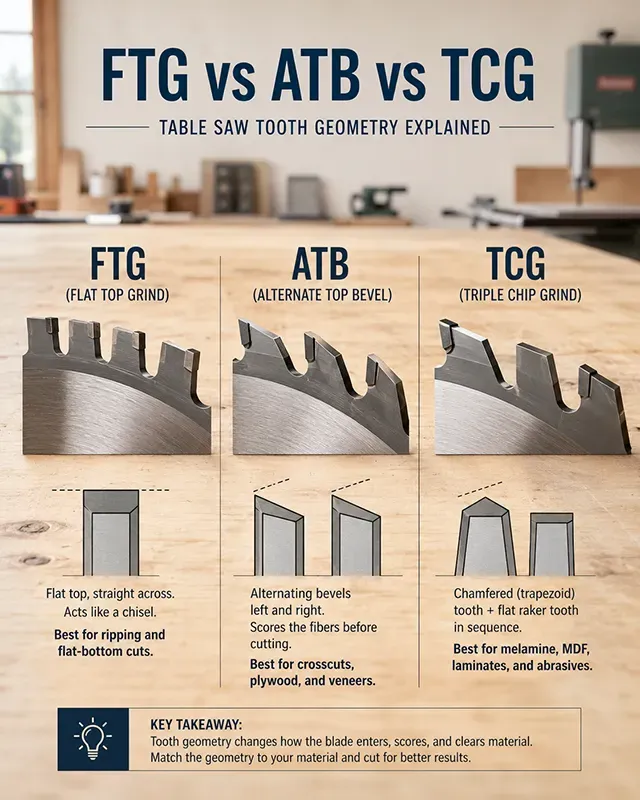
FTG vs ATB vs TCG: Table Saw Tooth Geometry Explained
Learn how FTG, ATB, and TCG table saw blade grinds change cutting mechanics, tearout, chip clearance, durability, and material choice.
Table Saw Blade Hook Angle Explained: Feed Rate, Grab, and Cut Controlmechanics •Jun 3, 2026
mechanics •Jun 3, 2026
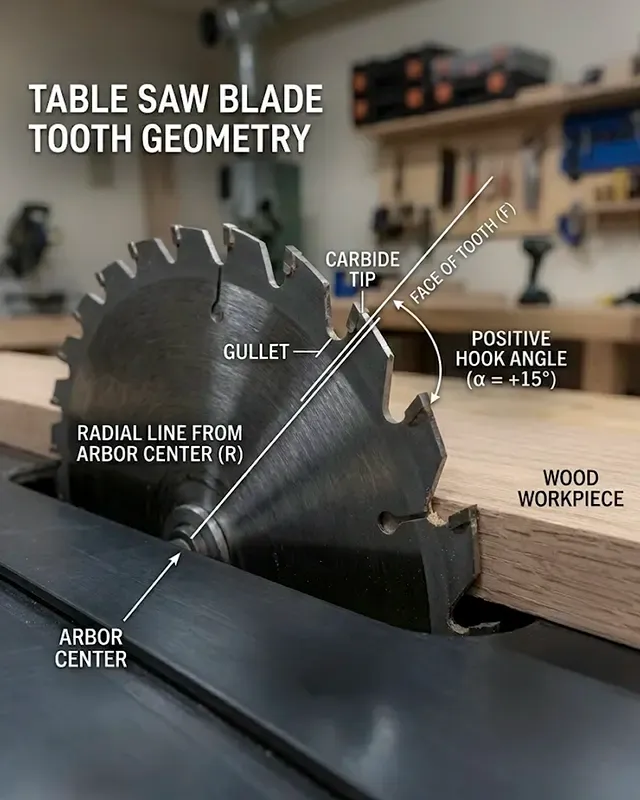
Table Saw Blade Hook Angle Explained: Feed Rate, Grab, and Cut Control
Learn how table saw blade hook angle affects feed rate, grab, surface finish, and cutting control across rip, crosscut, plywood, and specialty blades.
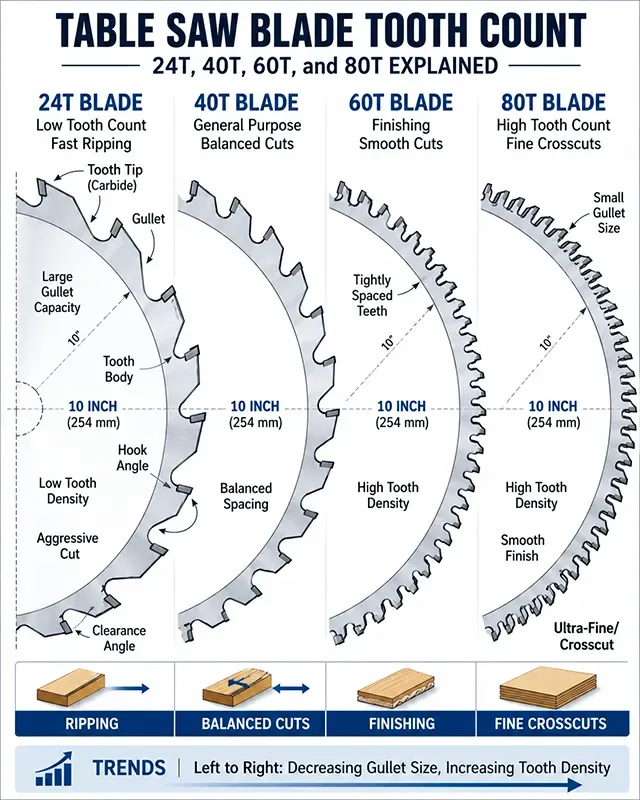
Table Saw Blade Tooth Count: 24T, 40T, 60T, and 80T Explainedmechanics •Jun 2, 2026
mechanics •Jun 2, 2026
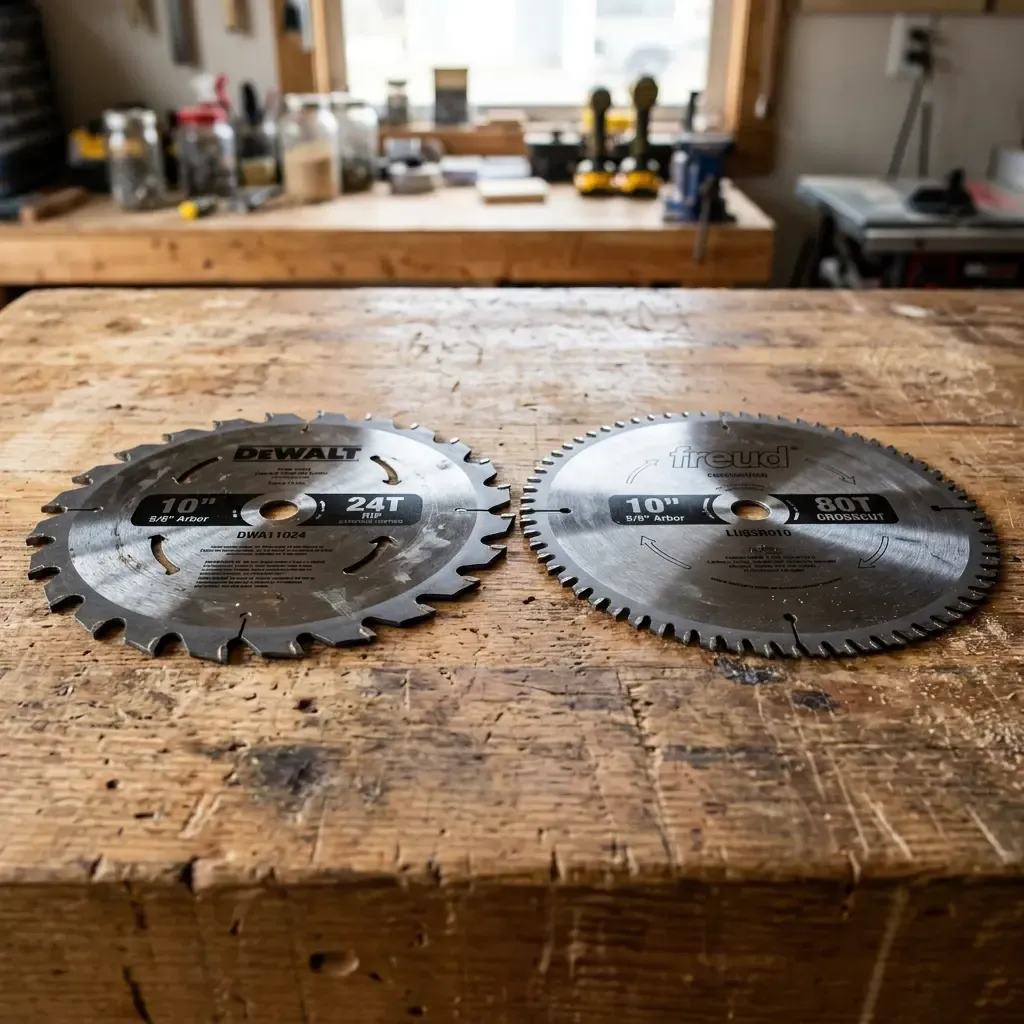
Table Saw Blade Tooth Count: 24T, 40T, 60T, and 80T Explained
Understand how table saw blade tooth count affects cut quality, feed rate, heat, and motor load across 24T, 40T, 50T, 60T, and 80T blades.
Table Saw Blades for Plywood and Melamine: Grind, Teeth, and Tearoutaccessories •Jun 2, 2026
accessories •Jun 2, 2026
Table Saw Blades for Plywood and Melamine: Grind, Teeth, and Tearout
Cutting veneered plywood and melamine is sensitive to blade geometry. Learn how tooth count, ATB, Hi-ATB, TCG, and hook angle affect tearout risk.
Rip Blade vs Crosscut Blade: Teeth, Gullets, and Cut Qualitymechanics •Jun 1, 2026
mechanics •Jun 1, 2026
Rip Blade vs Crosscut Blade: Teeth, Gullets, and Cut Quality
A mechanical breakdown of why rip and crosscut table saw blades behave differently, based on tooth count, tooth grind, gullets, and feed direction.
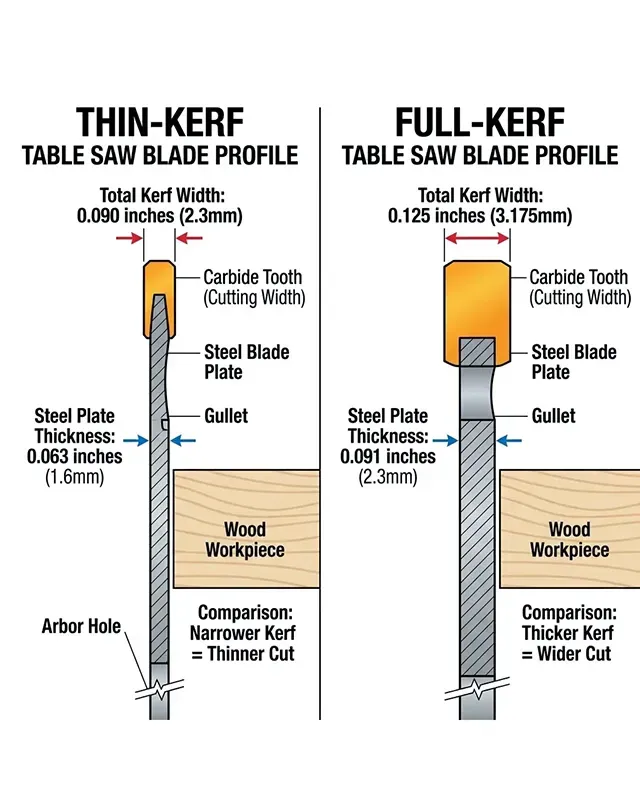
Thin-Kerf vs Full-Kerf Table Saw Blades: Load and Stabilitymechanics •Jun 1, 2026
mechanics •Jun 1, 2026
Thin-Kerf vs Full-Kerf Table Saw Blades: Load and Stability
Understand the mechanical tradeoffs between thin-kerf and full-kerf table saw blades, including motor load, cut width, plate stiffness, material waste, and riving knife compatibility.
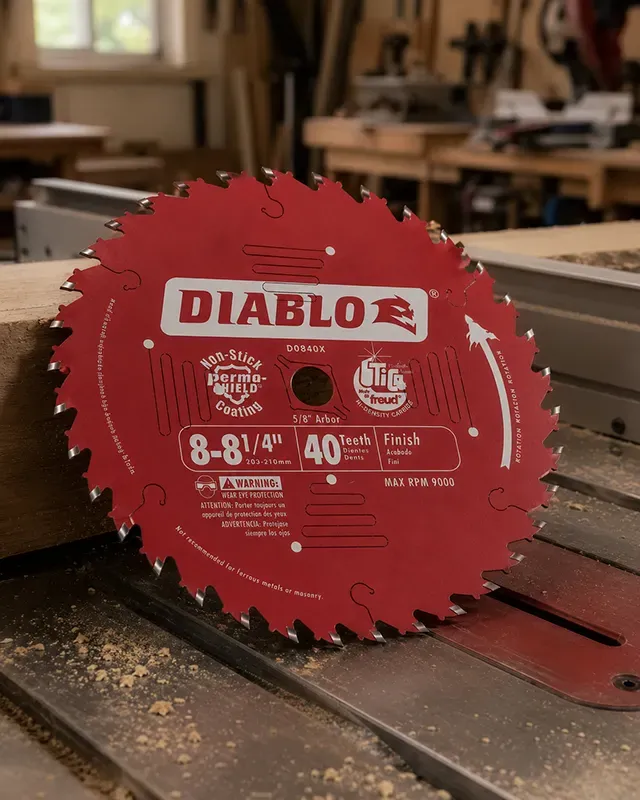
8-1/4-Inch Table Saw Blades: Why Compact Saws Use Smaller Bladesmechanics •May 24, 2026
mechanics •May 24, 2026
8-1/4-Inch Table Saw Blades: Why Compact Saws Use Smaller Blades
Learn why compact jobsite table saws often use 8-1/4-inch blades, how blade size affects cut depth, motor load, tip speed, and how they compare with 10-inch blades.
First Table Saw Buying Guide: What Matters Before Brand or Pricemechanics •May 24, 2026
mechanics •May 24, 2026
First Table Saw Buying Guide: What Matters Before Brand or Price
A practical guide to choosing your first table saw, focusing on fence systems, table materials, safety mechanisms, and avoiding common beginner mistakes.
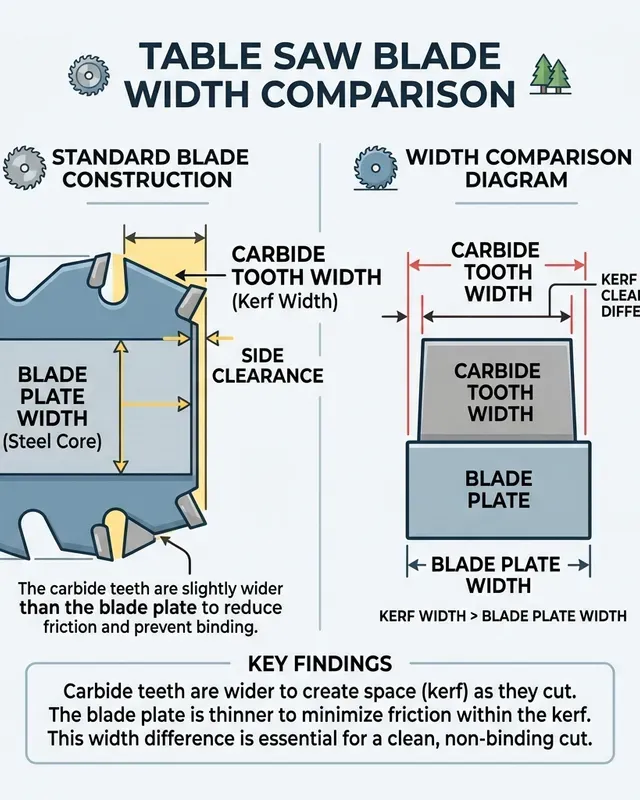
Kerf Explained: What It Means for Table Saw Bladesaccessories •May 24, 2026
accessories •May 24, 2026
Kerf Explained: What It Means for Table Saw Blades
Understand table saw blade kerf, the difference between thin and full kerf blades, and why kerf must match your saw's motor and riving knife.
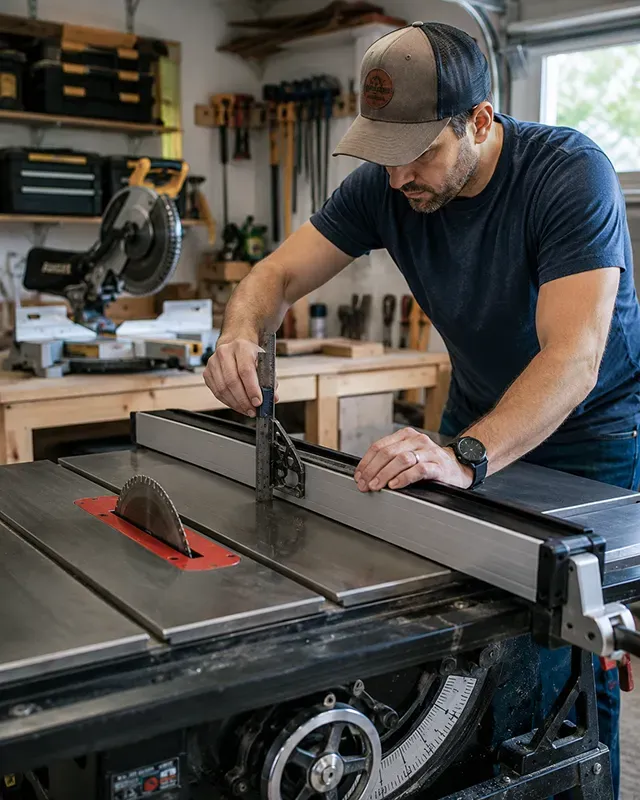
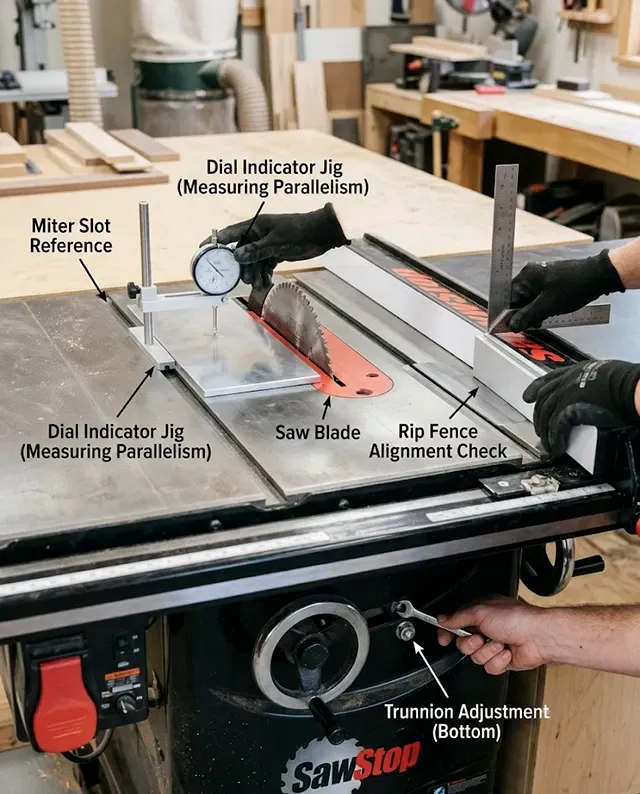
Table Saw Blade Alignment: Miter Slot, Fence, and Trunnion Checksmechanics •May 24, 2026
mechanics •May 24, 2026
Table Saw Blade Alignment: Miter Slot, Fence, and Trunnion Checks
A protocol-based guide to checking table saw blade alignment, separating runout from alignment error, and understanding when trunnion or fence adjustment is needed.