
Crosscut Sleds: Build or Buy? (Shop-Made vs. Aftermarket)
Brands analyzed: Rockler, Incra, Kreg
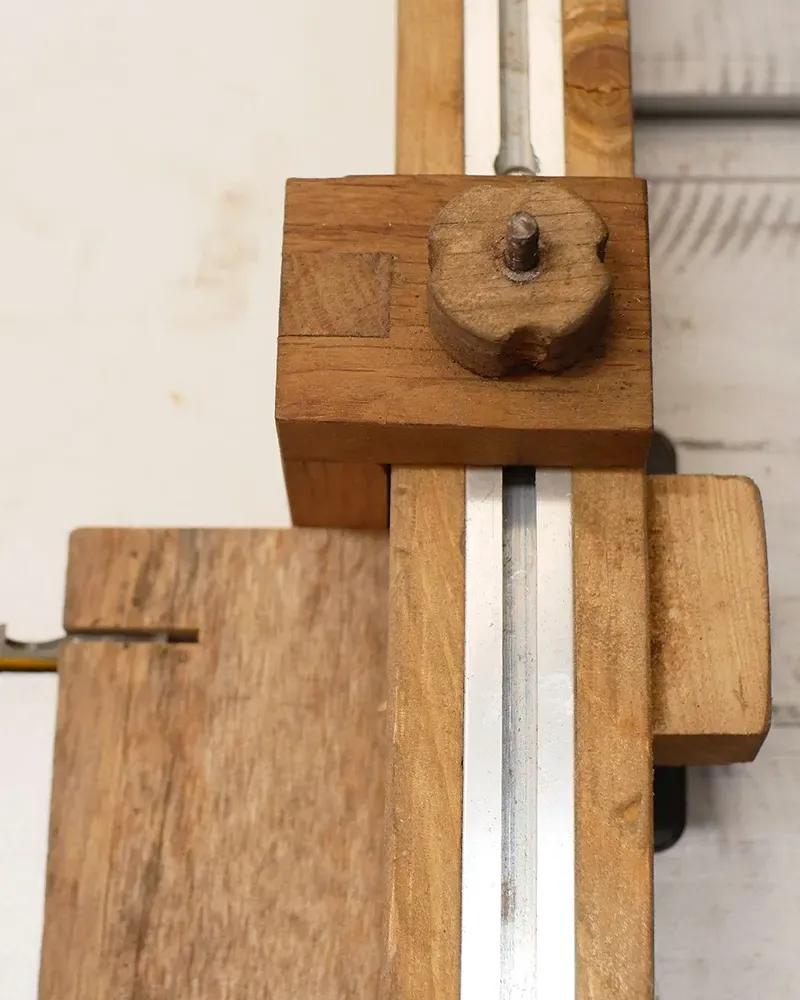
Most table saws, especially jobsite and contractor models, ship with factory miter gauges that feel like an afterthought. If you slide the gauge into the track, there is almost always a bit of lateral play. That tiny amount of side-to-side wiggle may not seem like much at first, but it’s often enough to throw off repeatable crosscuts.
Trying to crosscut small pieces with a standard miter gauge also forces your hands uncomfortably close to the blade. Without proper backing behind the workpiece, the offcut has a tendency to catch.
That’s usually where a crosscut sled comes in. Because a sled uses runners that ride in both miter slots simultaneously, it greatly reduces the tracking slop you get from a standard miter gauge. It also acts as a zero-clearance backing right where the blade exits the wood, which helps reduce tear-out along the back edge of the cut.
Eventually, every table saw owner hits the same crossroad: do you spend a Saturday building a sled out of scrap, or do you drop the cash on a commercial aftermarket setup? Both approaches work. The better option mostly depends on how you use your saw and how much setup work you’re willing to tolerate.
Path 1: The Shop-Made Crosscut Sled
Build your own from a 3/4-inch plywood base, a sturdy rear fence, and hardwood or UHMW plastic runners. Best for budget-conscious woodworkers who enjoy hands-on calibration.
Key Specs
Pros
- Cost: Almost nothing if you have scrap plywood lying around
- Custom Fit: Tailored to your saw's exact table size and fence height
- Zero-Clearance: Easy to refresh the kerf or swap out runners as they wear
- Learning: Teaches machine calibration skills useful for every future jig
Cons
- Calibration Time: Getting the rear fence dead square via the 5-cut method is tedious
- Stability: Plywood moves with humidity — the sled can drift out of square seasonally
- Maintenance: Hardwood runners swell with moisture and need periodic sanding
Path 2: Commercial Aftermarket Sleds
Brands like Rockler, Incra, and Kreg pair an MDF base with heavy-duty extruded aluminum fences. Best for high-volume shops where repeatability and setup speed matter most.
Key Specs
Pros
- Easier Calibration: Machined aluminum fences bypass the 5-cut method entirely
- Built-in Workholding: Integrated T-tracks and toggle clamps for hands-free safety
- Stability: MDF and aluminum stay square far longer than plywood
- Safety: High-visibility guards and precision stop blocks usually included
Cons
- Cost: Significant investment for a single-purpose jig — hard to justify for casual users
- Storage: Large aluminum sleds are awkward to move in a cramped garage shop
- Fit: Still requires adjusting set screws to match your specific miter slot tolerances
The Verdict: Build or Buy?
There is no strict right or wrong choice here, and a lot of shops end up running a hybrid workflow.
If you are just starting out or only need to crosscut small pieces occasionally, the Shop-Made Sled is a rite of passage. It teaches you about saw alignment and jig construction without a high financial risk. It’s a great exercise in machine calibration, provided you use flat material and seal it well.
However, if you’re building cabinets or furniture where every tenth of a degree matters—and you’re tired of re-squaring your plywood sled every autumn—the Commercial Sled is a worthwhile upgrade. Having a dedicated aftermarket setup for specific angle work, with built-in hold-downs and reliable stops, offers a level of repeatability that is difficult to replicate consistently with a simple plywood jig. The time you save on calibration alone often pays for the tool over a single large project.
🛠️ If You Build the DIY Sled — Materials You'll Need
You don't need to buy anything new to build a basic sled, but these upgrades make a measurable difference in long-term accuracy.
- Baltic Birch Plywood (3/4")Check price →
Dimensionally stable base that resists warping better than standard shop ply.
- UHMW Plastic Miter BarCheck price →
Doesn't swell in humidity — runners stay smooth and play-free all year round.
- Toggle Clamps (2-pack)Check price →
Bolt through the sled fence to hold workpieces safely hands-free.