mechanics •Jun 3, 2026
Table Saw Blade Cleaning: Resin Buildup, Heat, and Cut Quality
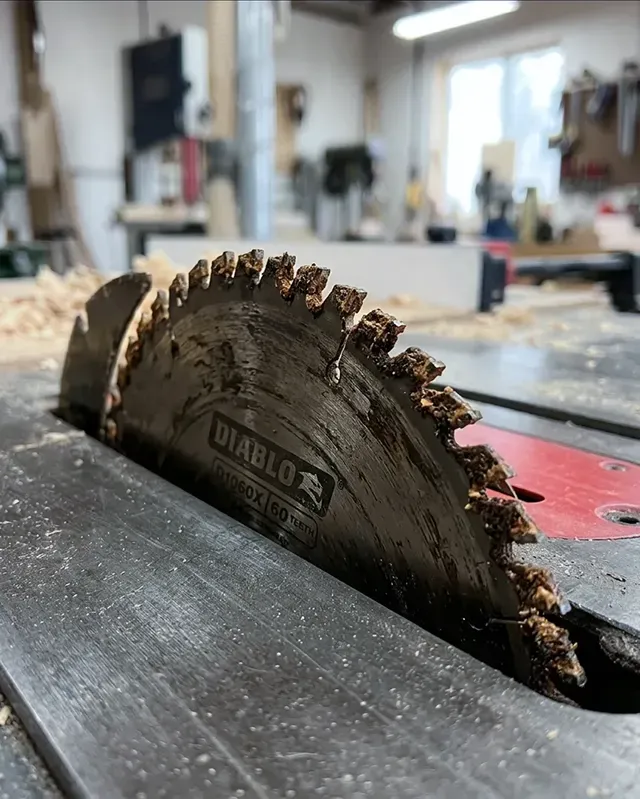
A table saw blade can feel dull when pitch buildup increases friction and heat. Learn how resin changes tooth clearance, cut quality, and blade maintenance.

Technical analysis of tool design, adjustments, and engineering properties.
A table saw blade can feel dull when pitch buildup increases friction and heat. Learn how resin changes tooth clearance, cut quality, and blade maintenance.
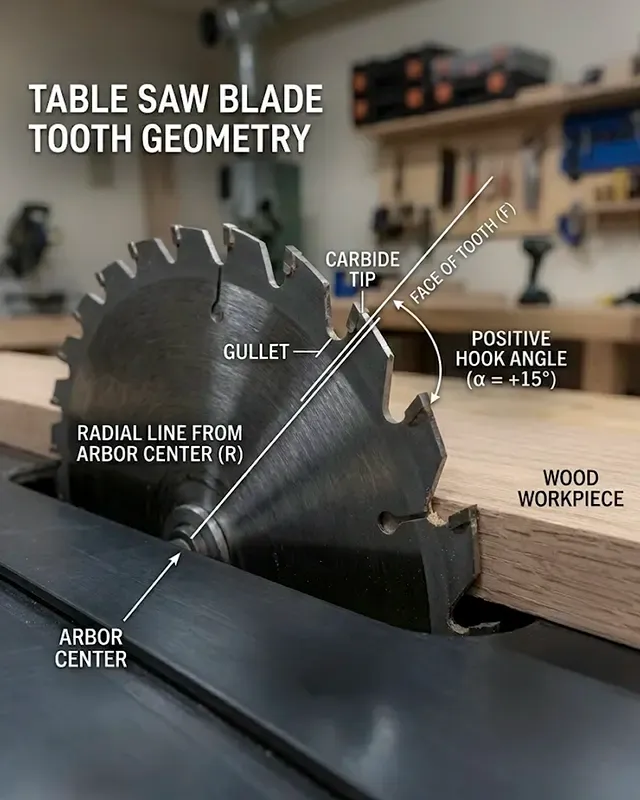
Learn how table saw blade hook angle affects feed rate, grab, surface finish, and cutting control across rip, crosscut, plywood, and specialty blades.
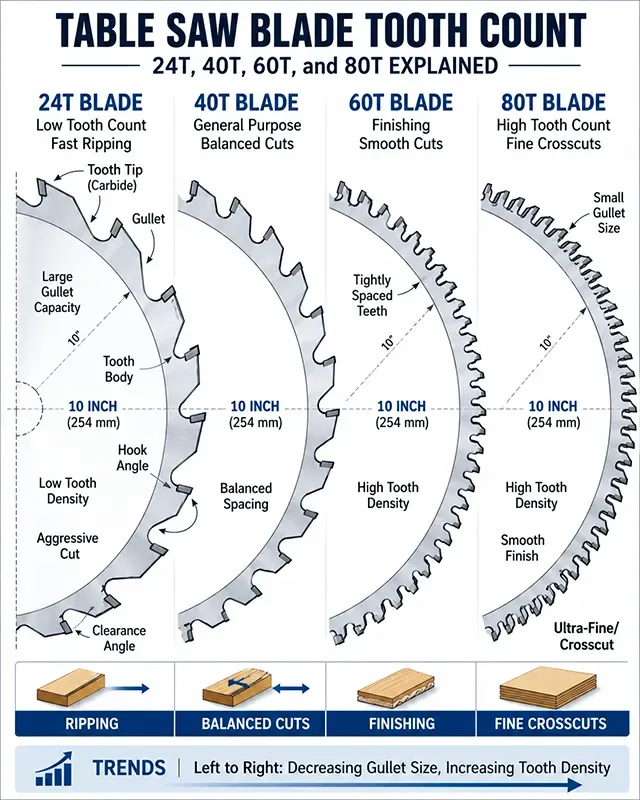
Understand how table saw blade tooth count affects cut quality, feed rate, heat, and motor load across 24T, 40T, 50T, 60T, and 80T blades.
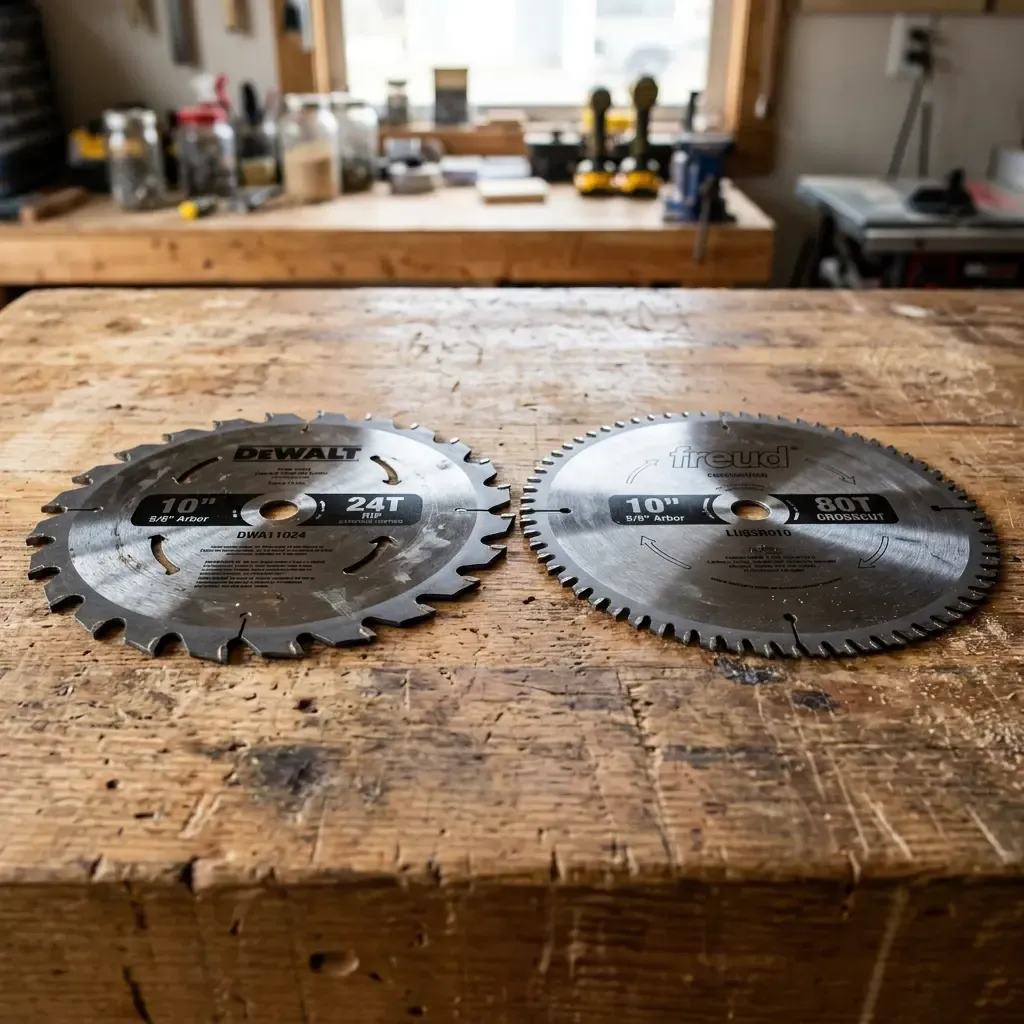
A mechanical breakdown of why rip and crosscut table saw blades behave differently, based on tooth count, tooth grind, gullets, and feed direction.
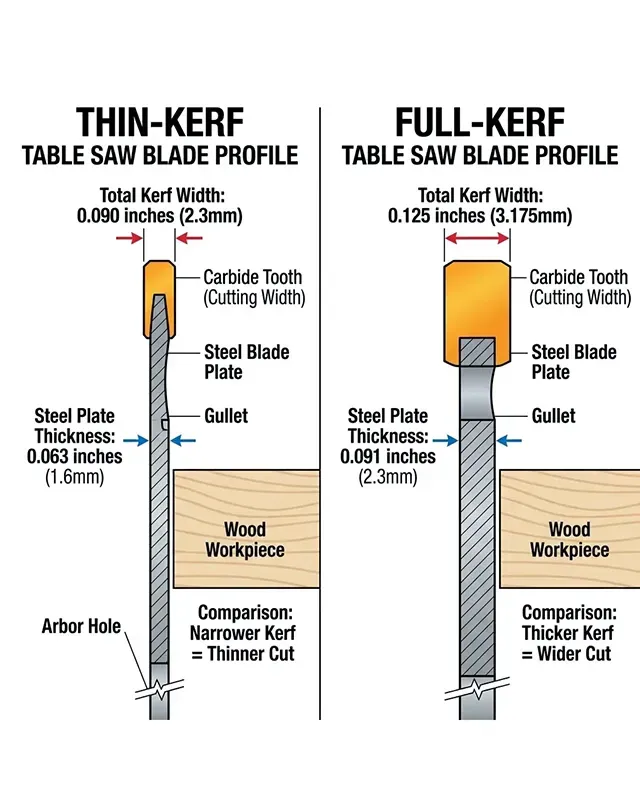
Understand the mechanical tradeoffs between thin-kerf and full-kerf table saw blades, including motor load, cut width, plate stiffness, material waste, and riving knife compatibility.
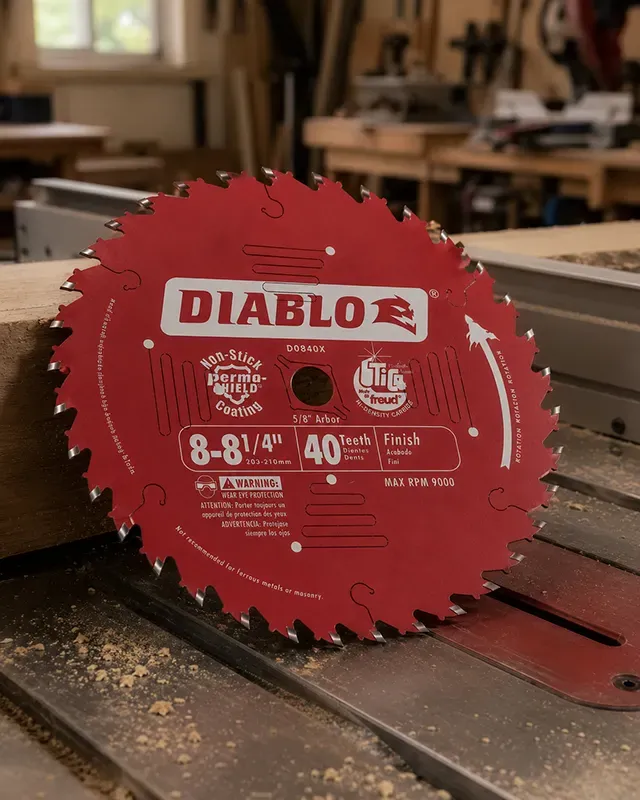
Learn why compact jobsite table saws often use 8-1/4-inch blades, how blade size affects cut depth, motor load, tip speed, and how they compare with 10-inch blades.
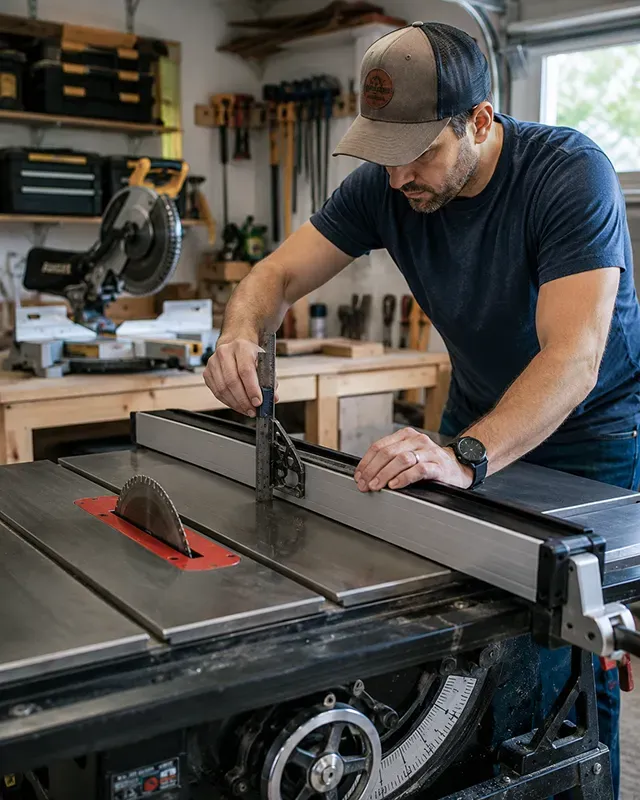
A practical guide to choosing your first table saw, focusing on fence systems, table materials, safety mechanisms, and avoiding common beginner mistakes.
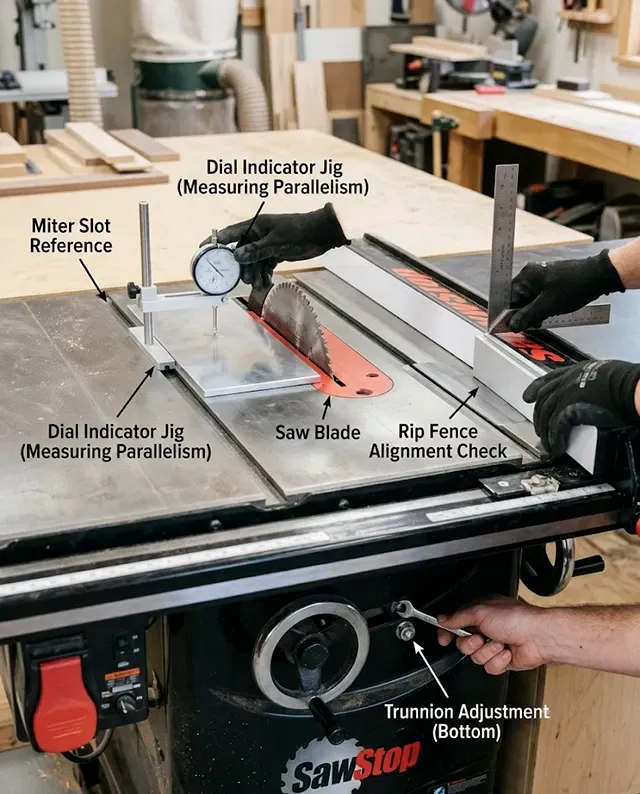
A protocol-based guide to checking table saw blade alignment, separating runout from alignment error, and understanding when trunnion or fence adjustment is needed.
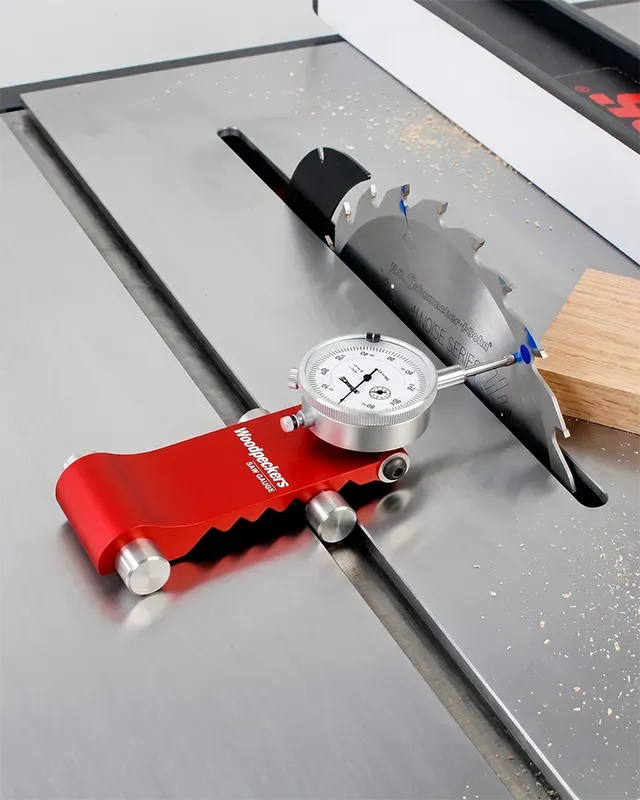
A mechanical explanation of table saw runout, the difference between arbor and blade wobble, and practical diagnostic ranges for woodworking.
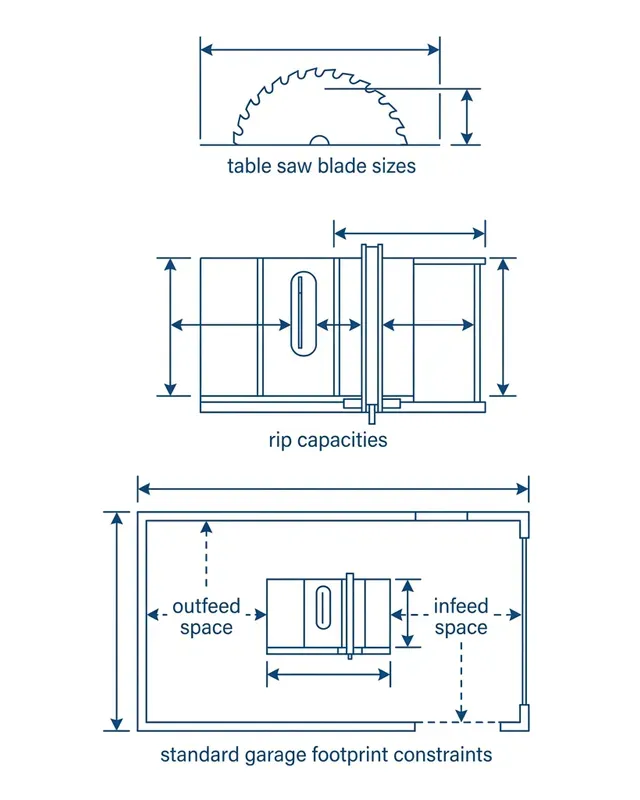
A practical guide to choosing the right table saw size for a garage shop, including 8-1/4 vs 10-inch blades, rip capacity, footprint, and outfeed support.
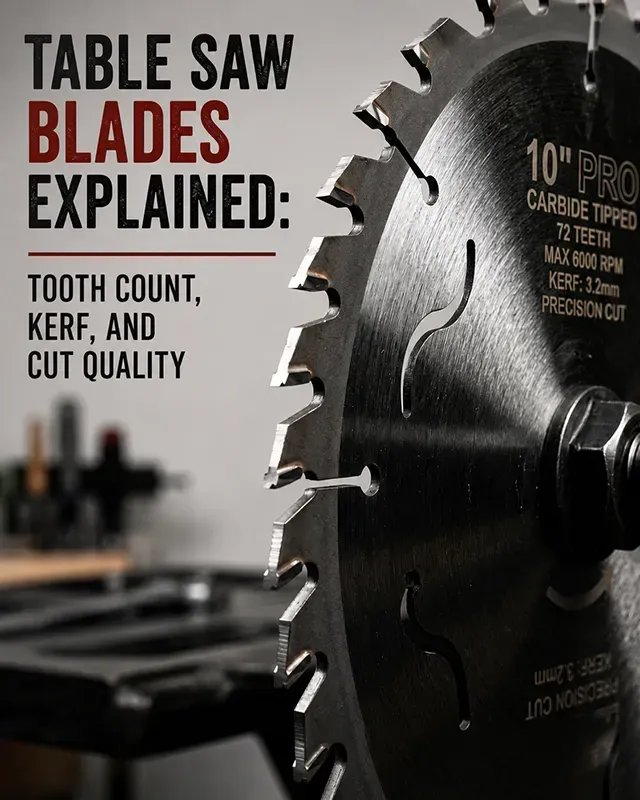
An engineering-minded breakdown of 10-inch table saw blades. Learn how tooth count, kerf width, grind geometry, and hook angles dictate real-world cut quality.
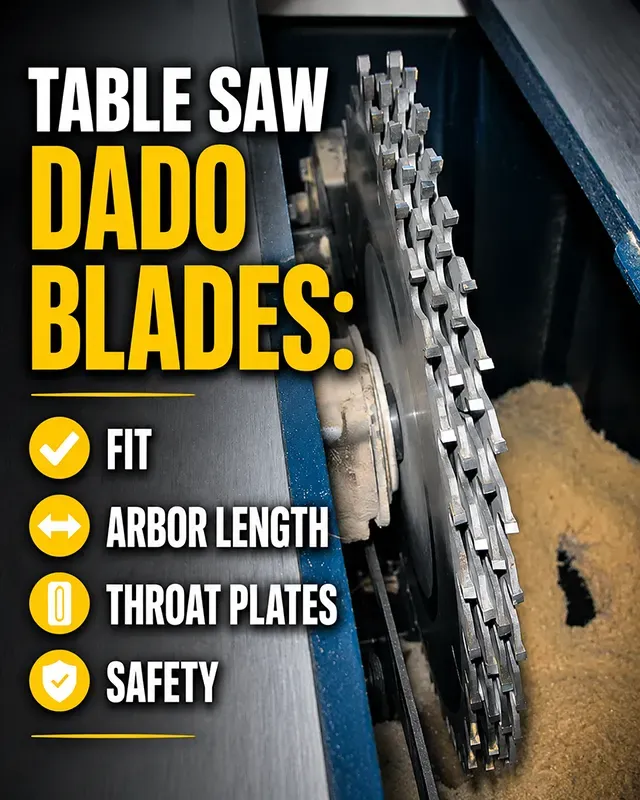
Not all table saws can run a dado stack safely. Learn how to check arbor length, dado width, throat plate fit, motor load, and brake-system compatibility before buying.
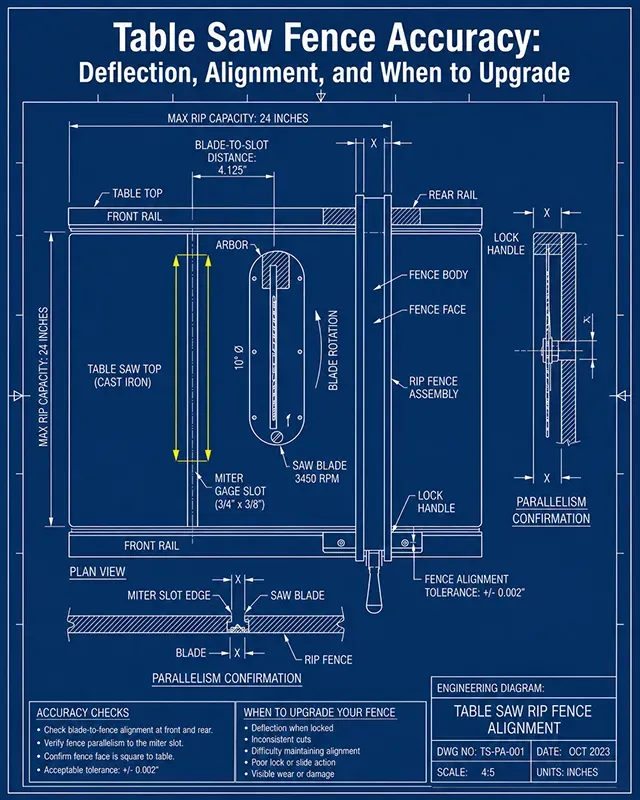
Learn how table saw fence alignment, deflection, repeatability, and locking mechanisms affect rip accuracy — plus a dial indicator protocol for deciding when to adjust, repair, or upgrade your rip fence.
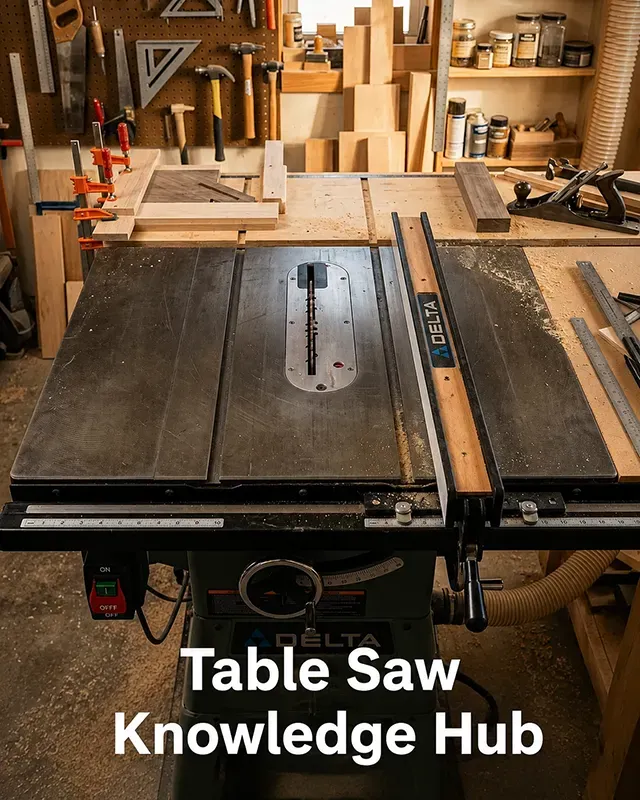
A structured guide to table saw mechanics, blades, fence accuracy, calibration, safety, dust collection, and buying decisions.
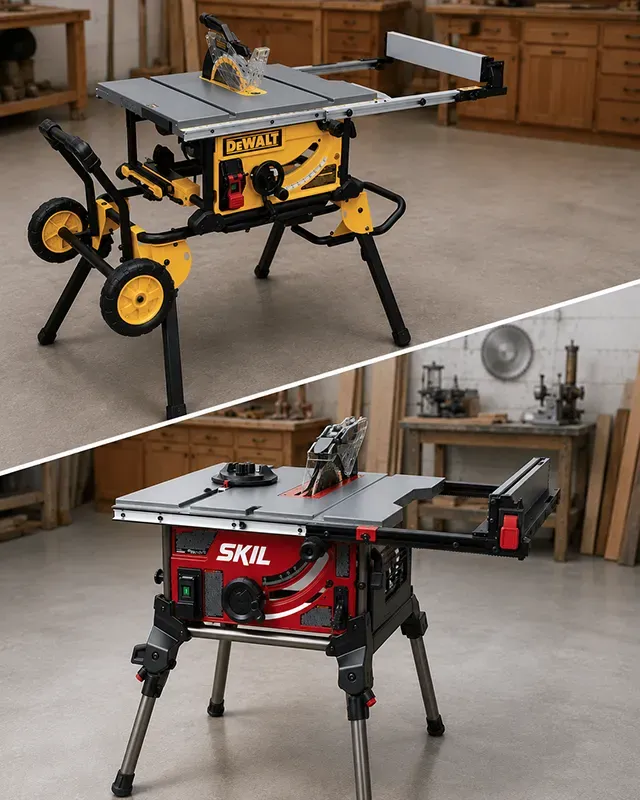
Comparing the DeWalt DWE7491RS and Skil TS6307-00 table saws. We look at fence mechanics, stand designs, rip capacity, and ownership tradeoffs.
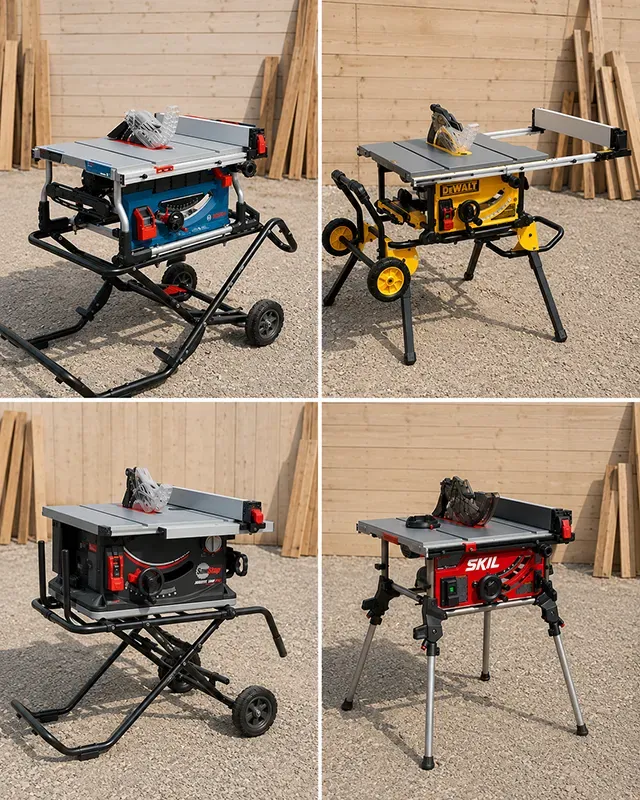
An evidence-led comparison of popular jobsite table saws, focusing on fence mechanics, stand mobility, safety features, and ownership tradeoffs.
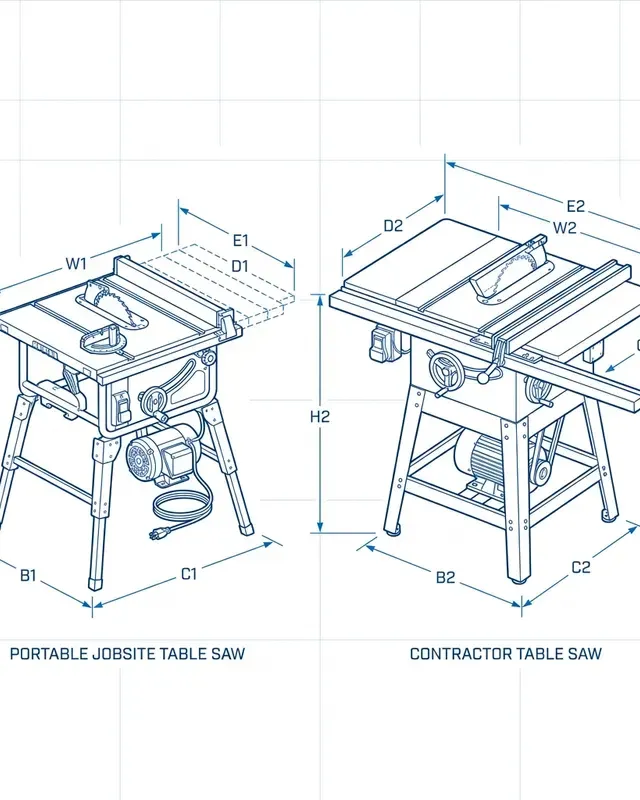
A mechanical comparison of jobsite and contractor table saws, explaining how motor type, table mass, fence design, and support surface change real shop use.
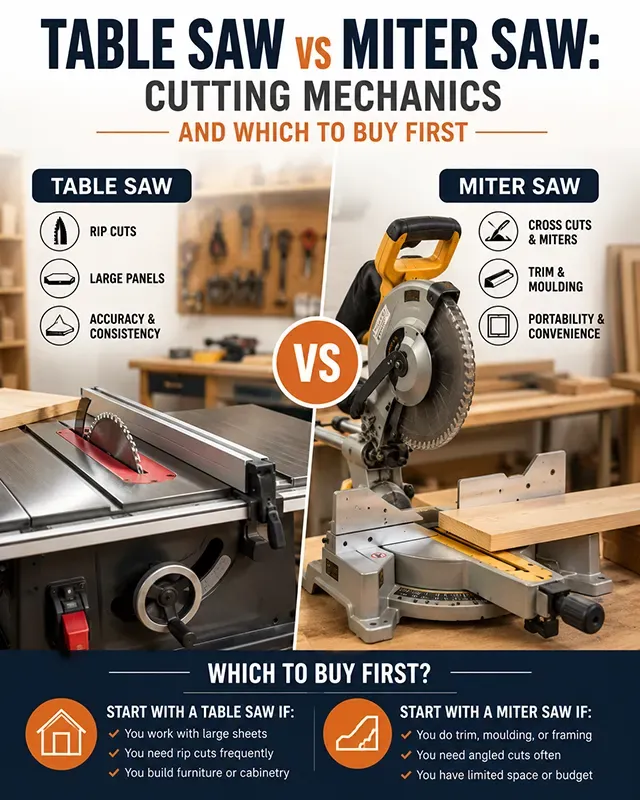
Choosing between a table saw and a miter saw comes down to cutting mechanics. We analyze ripping, crosscutting, accuracy, and which tool to buy first.